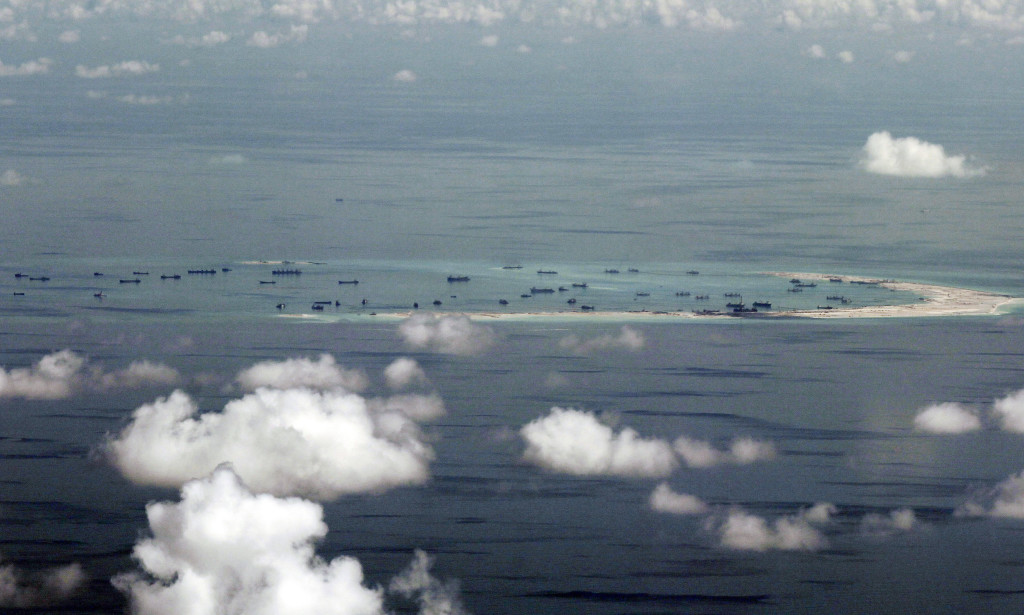
This May 11, 2015 file photo shows land reclamation of Mischief Reef in the Spratly Islands in the South China Sea. (Ritchie B. Tongo/Pool Photo via AP, File) Defense ministers from Asean and the United States agreed Saturday to work closer together to strengthen maritime security in the region to combat terrorism, respond to natural disasters and, crucially, manage tensions at sea. They were at the Asean-US Defense Ministers’ Informal Meeting in Hawaii, where they discussed practical ways to prevent incidents from escalating in the South China Sea amid heightened tensions in the contested waters recently. Asean ministers welcomed the US’ continued engagement in the region and its active role in the Asean Defense Ministers’ Meeting-Plus, a forum which also includes China, Japan, South Korea, India, Russia, Australia and New Zealand. The ministers also discussed direct lines of communication and forums to resolve disputes, Singapore Defense Minister Ng Eng Hen said. “We need not only the absence of tensions but established platforms to anticipate and defuse problems before they occur,” he told his counterparts. He called for a Code for Unplanned Encounters at Sea, which guides how military vessels should react to situations, to include coast guards and non-military ships, and for regional navies to develop a code of conduct for submariners to enhance underwater safety. Asean ministers meet regularly with their counterparts from key partners, but the current meeting comes as the US is keen to stress its commitment to its Asia rebalance. US Defense Secretary Ash Carter told Read More …
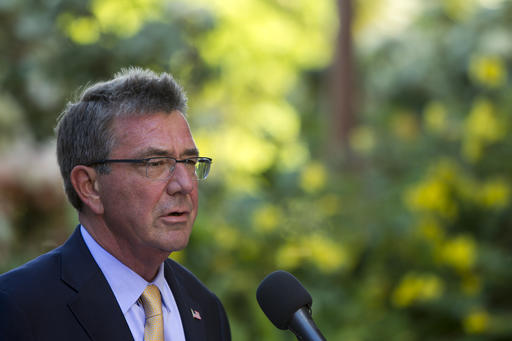
U.S. Defense Secretary Ash Carter speaks at a press conference during a defense ministers meeting of ASEAN , Friday, Sept. 30, 2016 in Kapolei, Hawaii. AP PHOTO KO OLINA, Hawaii—US Defense Secretary Ash Carter on Friday opened talks in Hawaii with his counterparts from 10 Southeast Asian nations, even as US relations with the Philippines, a longtime American ally, grew shakier. In opening comments to the meeting at a seaside resort on the island of Oahu, Carter said he wanted to encourage more regional cooperation in Asia and the Pacific on key issues like maritime security and combatting terrorism. As part of a broader Obama administration push to “rebalance” its security interests by paying greater attention to Asia and the Pacific after 15 years focused mainly on the Middle East, Carter is pitching the idea of an Asian security “network.” “The network will help us uphold important principles like resolving disputes peacefully; ensuring that countries can make their own choices free from foreign coercion and intimidation; and preserving the freedom of overflight and navigation guaranteed by international law,” he said. A more immediate issue not mentioned by Carter in his formal remarks, however, was a steep deterioration in relations with the Philippines. When Carter visited the Philippines in April, he praised the strength of the partnership. Earlier this week in San Diego he called US-Philippine defense relations “ironclad.” That seeming closeness took a sharp downturn when Rodrigo Duterte was elected president in June. In early September, President Barack Obama canceled Read More …
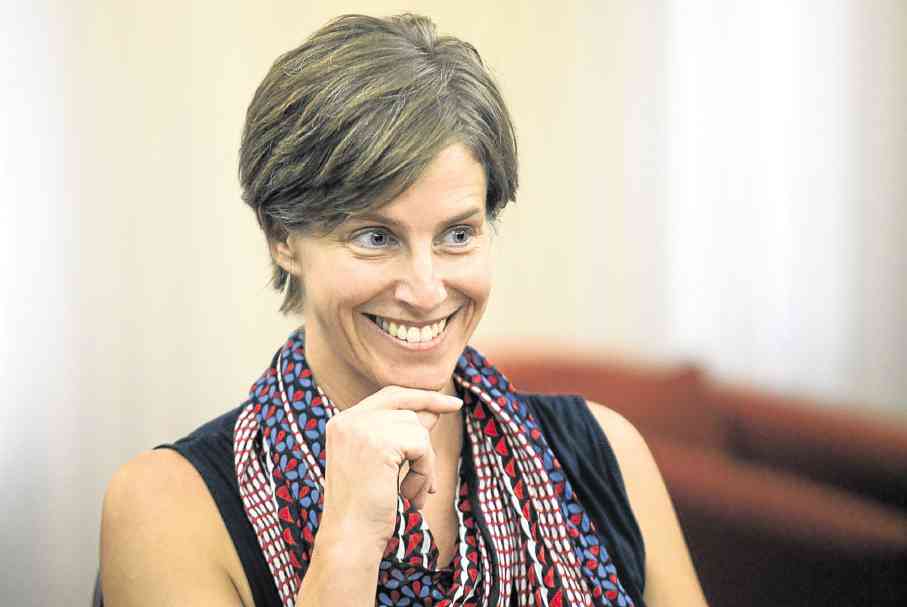
CHARM OFFENSIVE US Embassy press attaché Molly Koscina finds her job cut out for her amid President Duterte’s antagonistic stance toward the Philippines’ longtime ally. ELOISA LOPEZ Just how do you launch a charm offensive to counter President Rodrigo Duterte’s harsh words against the United States? Fortunately, the job of parrying such jabs has fallen on an articulate, seasoned and, incidentally, female American diplomat. Molly Rutledge Koscina, who can intimidate with her 5’10” frame and disarm with her generous smiles, found her hands full when she took on the job as press attaché and first secretary of the US Embassy over a month ago. She succeeded former spokesperson Kurt Hoyer. “Since I’ve been here, it’s really been nonstop press queries,” Koscina told Inquirer editors during her visit to the newspaper’s offices last week. Koscina admitted that in her 12 years in the US State Department, and her previous postings in Havana, Cuba, and Beijing and Shanghai in China, she had not encountered anything like a President mouthing off against a traditional ally. “In my memory, there were never words like these against the United States,” Koscina said. Expletive Since becoming President, Mr. Duterte has declared he was no fan of the US, notwithstanding the Philippines’ long-standing ties with the world’s most powerful nation. In recent weeks, the President has thrown an expletive against President Obama (among other world leaders, including Pope Francis and the United Nations’ Ban Ki-moon), used a sexist slur against outgoing US Ambassador Philip Goldberg, and announced he Read More …
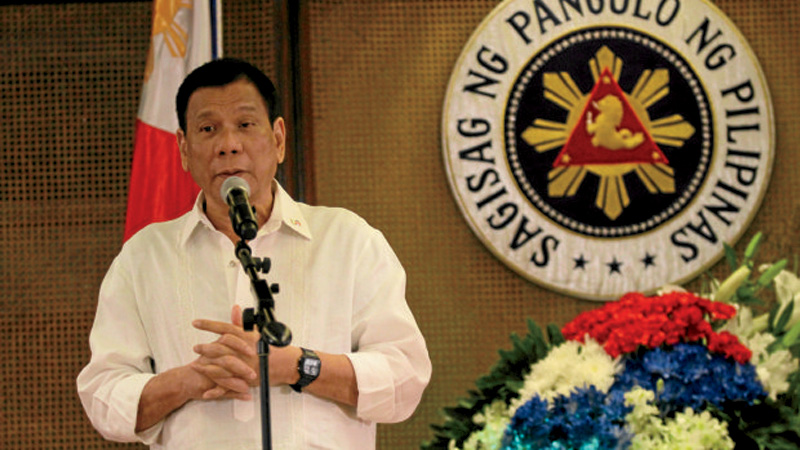
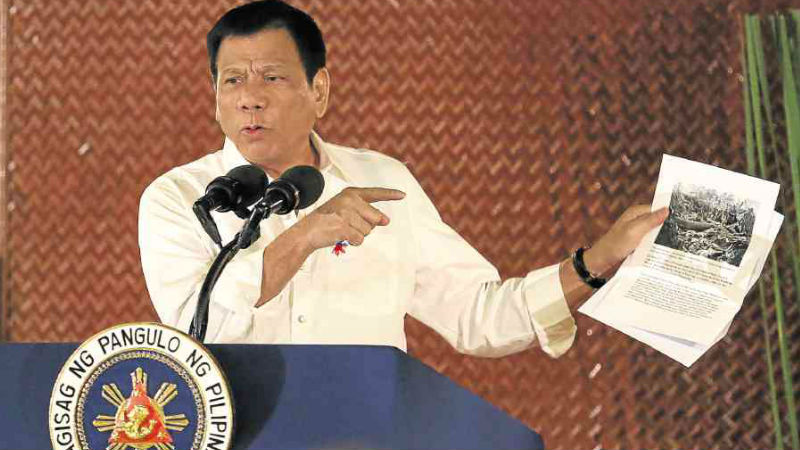
President Rodrigo Duterte. INQUIRER FILE PHOTO/JOAN BONDOC President Rodrigo Duterte on Saturday faced a barrage of criticism from the United Nations, Israel, Western governments and international rights groups for drawing parallels with his brutal war on drugs and Adolf Hitler’s extermination of Jews before and during World War II. Even longtime ally the United States has hinted at impatience with Mr. Duterte over his latest inflammatory comments, with Pentagon chief Ashton Carter and the US Embassy in Manila both saying the Philippine leader’s remark about being “happy to slaughter” 3 million drug addicts is “deeply troubling.” READ: Duterte’s Hitler remarks ‘deeply troubling,’ says Pentagon chief Early on Friday, Mr. Duterte, speaking to reporters at Davao International Airport after arriving from a two-day official visit to Vietnam, said his critics were threatening to bring him before an international court for the killing of thousands of people in his bloody war on drugs and complained that they were picturing him as “a cousin of Hitler” even if nothing had been proven against him. Noting that Hitler had murdered millions of Jews, Mr. Duterte said he was also willing to kill the 3 million drug addicts in the Philippines if it were the only way to solve the country’s drug problem. READ: Heil Digong? “There are 3 million drug addicts (in the Philippines). I’d be happy to slaughter them,” he said. “If Germany had Hitler, the Philippines would have …,” he said, pausing and pointing to himself. “You know my victims. I Read More …
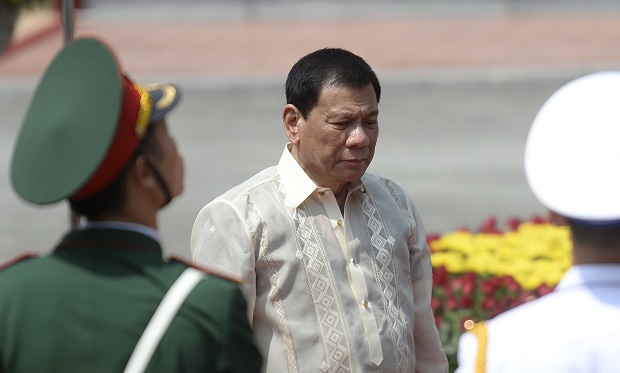
President Rodrigo Duterte reviews an honor guard with his Vietnamese counterpart Tran Dai Quang during a welcome ceremony at the presidential palace in Hanoi, Vietnam, on Sept. 29. AP JERUSALEM—Israel’s foreign ministry says it’s “unfortunate” that President Rodrigo Duterte chose to invoke Adolf Hitler and the Holocaust in his bloody anticrime war. Spokesperson Emmanuel Nahshon says Saturday Israel is convinced the Philippine President “will find a way to clarify his words.” On Friday, the outspoken Duterte said “Hitler massacred 3 million Jews … there’s 3 million drug addicts. There are. I’d be happy to slaughter them.” Duterte, under fire for extrajudicial killings in the drug war, was referring to the estimated number of drug addicts in the country. The US has warned the President’s violent rhetoric could affect aid. The Nazis and their allies killed 6 million Jews during World War II as part of a campaign to obliterate European Jewry. Latest Pakistan rattled by 5.5-magnitude earthquake UAAP: FEU downs UST, gets share of 2nd Singh, Soltones star as Laoag routs Coast Guard in V-League opener NU pushes streak to 37 games in UAAP women’s hoops Recommended Disclaimer: Comments do not represent the views of INQUIRER.net. We reserve the right to exclude comments which are inconsistent with our editorial standards. FULL DISCLAIMER View Comments For feedback, complaints, or inquiries, contact us.
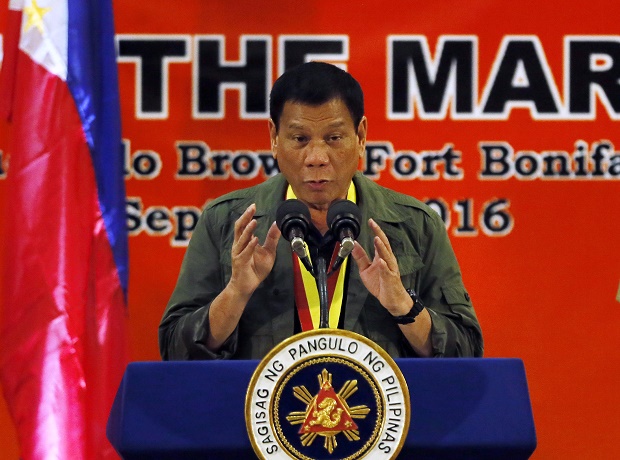
In this Sept. 27, 2016, photo, Philippine President Rodrigo Duterte addresses Philippine Marines in suburban Taguig city east of Manila, Philippines. As the body count mounts in the Philippines’ war on drugs, and its combative president’s rhetoric plumbs new depths, the mood in Washington toward the key Asian ally is hardening. Influential U.S. lawmakers are warning that the extra-judicial killings in the drugs war–that Duterte on Sept. 30 compared to the Holocaust–could affect American aid. AP WASHINGTON — As the body count mounts in the Philippines’ deadly war on drugs, and its combative president’s rhetoric plumbs new depths, the mood in Washington toward a key Asian ally is hardening. Influential US lawmakers are warning that the extra-judicial killings in the drug war — President Rodrigo Duterte on Friday compared it to the Holocaust — could affect American aid. And while the Obama administration maintains that its 65-year-old alliance with the Philippines remains “ironclad,” a senior US diplomat is cautioning Duterte against more anti-US posturing. READ: Pentagon: US-PH ties ironclad “I think it would be a serious mistake in a democratic country like the Philippines to underestimate the power of the public’s affinity for the US That’s people power,” Assistant Secretary of State Daniel Russel told The Associated Press. Russel did not draw a direct comparison, but past Philippine presidents have been toppled by popular protests dubbed “people power,” including former dictator Ferdinand Marcos, who was ousted in 1986. Duterte has bristled at US criticism of the drug war and repeatedly Read More …
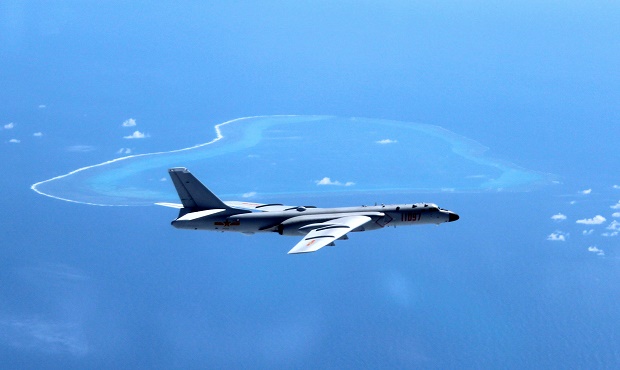
In this undated file photo released by Xinhua News Agency, a Chinese H-6K bomber patrols the islands and reefs in the South China Sea. China is pitted against smaller neighbors in multiple disputes over islands, coral reefs and lagoons in waters crucial for global commerce and rich in fish and potential gas and oil reserves in the South China Sea. AP FILE PHOTO PEARL HARBOR, Hawaii — Singapore’s defense minister says countries need to look for practical ways to defuse incidents in the South China Sea. China is pitted against smaller neighbors in multiple disputes over islands in South China Sea waters crucial for global commerce. The area is also rich in fish and potential oil and gas reserves. Singapore Defense Minister Ng Eng Hen told reporters Friday on the sidelines of a meeting in Hawaii that incidents may not necessarily involve military ships. He noted navies have established protocols for when they encounter each other at sea. Instead, he says confrontations may develop between fishing vessels or other civilian ships. Ng says Association of Southeast Asian Nation defense ministers and US Defense Secretary Ash Carter talked at their Hawaii meeting about ways to prevent incidents from escalating. RELATED STORIESWarming of ties slows Beijing’s Panatag Shoal plan Taiwan asks Google to blur images of South China Sea island Latest 13 dead, 20 still missing in China after typhoon landslides North Korea building new submarine–US think tank Severe tropical storm ‘Igme’ enters PAR Palace: Duterte rejects comparisons with Hitler Recommended Disclaimer: Read More …
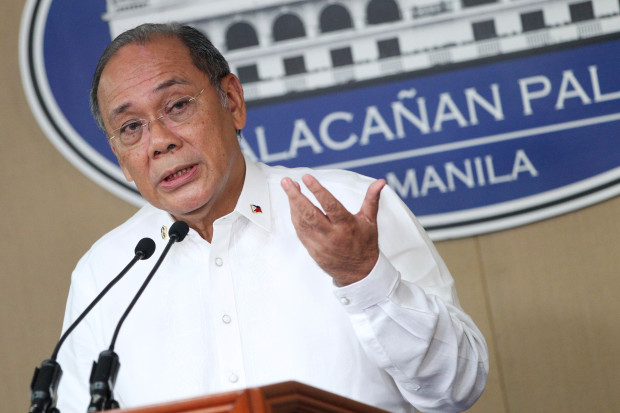
President Rodrigo Duterte. JOAN BONDOC/INQUIRER FILE PHOTO Malacañang has broken its silence on the firestorm created by President Rodrigo Duterte’s remarks comparing himself to Nazi dictator Adolf Hitler and that he would “be happy” exterminate 3 million drug addicts like the demagogue’s extermination of Jews. READ: Duterte ‘happy to slaughter’ drug suspects; cites Hitler In a brief radio briefing Saturday morning, Presidential Spokesperson Ernesto Abella clarified the President did not in any way praise Hitler as a role model in his remarks that he said were “oblique” or skewed explanations of what he meant. “The Philippines recognizes the deep significance of the Jewish experience especially their tragic and painful history. We do not wish to diminish the profound loss of 6 million Jews in the holocaust that deep midnight of their story as a people,” said Abella who did not entertain any question during the interview over state-owned DZRB radio. “The President’s reference to the slaughter was an oblique deflection of the way he has been pictured as a mass murderer, a Hitler, which is a label that he rejects,” said Abella. Abella, however, stood by the President’s statement that the unresolved killings of drug suspects by police and vigilantes would have a positive effect on the country. “He likewise draws an oblique conclusion that while the holocaust was an attempt to exterminate the future generation of Jews, the so-called extrajudicial killings, roundly attributed to him, will nevertheless result in the salvation of the next generation of Filipinos,” said Abella. Latest Read More …

BERLIN, Germany – The German government on Friday told the Philippine ambassador that comments by President Rodrigo Duterte likening his deadly crime war to Hitler’s efforts to exterminate Jews were “unacceptable.” Duterte, 71, won elections in May in a landslide after a campaign dominated by his pledge to eradicate drugs in society by killing tens of thousands of people. In comments Friday, he drew parallels between his campaign to wipe out the drug problem and Adolf Hitler’s genocidal drive. “Hitler massacred three million Jews. Now there are three million drug addicts (in the Philippines). I’d be happy to slaughter them,” Duterte told reporters in his home city of Davao. “At least if Germany had Hitler, the Philippines would have,” he said, then paused. “But you know, my victims, I would like to be (sic) all criminals to finish the problem of my country and save the next generation from perdition.” READ: Heil Digong? Nazi Germany slaughtered some six million Jews by the end of World War II. The German foreign ministry said in a statement that it had asked the Philippine envoy “to come to the ministry for a discussion on this issue”. “Any comparison of the singular atrocities of the Holocaust with anything else is totally unacceptable,” ministry spokesman Martin Schaefer told reporters earlier and reiterated in the statement. Germany, Europe’s top economy, has expressed serious concerns about Duterte’s crackdown, which has left more than 3,000 people dead in three months and threatened a breakdown of the rule of Read More …
Presidential Spokesman Ernesto Abella. FILE PHOTO The Philippines is not undermining the tragic history of the Jews. Malacañang issued this statement Saturday following the international outcry over President Rodrigo Duterte’s statement where he drew parallel comparisons between the execution of drug addicts in the Philippines and Adolf Hitler’s killing of millions of Jews during the Holocaust. “The Philippines recognizes the deep significance of the Jewish experience especially their tragic and painful history,” Presidential Spokesman Ernesto Abella said in a statement. “We do not wish to diminish the profound loss of 6 million Jews in the Holocaust – that deep midnight of their story as a people,” he added. Abella explained that Duterte was just deflecting comparisons between him and the former German strongman—a label, which the President does not accept. READ: Heil Digong? “Hitler murdered 3 million innocent civilians whereas Duterte was referencing to his “willingness to kill” 3 million criminal drug dealers—to save the future of the next generation and the country. Those are two entirely different things,” Abella said. Various individuals and organizations including Jewish groups have condemned Duterte’s “disgusting rhetoric.” The Anti-Defamation League, an international Jewish group based in the United States, said, “The comparison of drug users and dealers to Holocaust victims is inappropriate and deeply offensive. It is baffling why any leader would want to model himself after such a monster.” The Philippines was one of the nations which welcomed exiled Jews during the Holocaust. READ: When PH was the only door open to fleeing Read More …