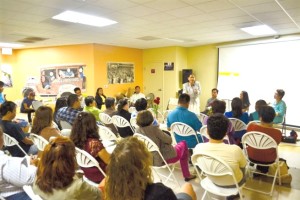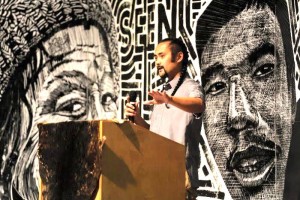
E.J.R. David at the Racial Equity Summit hosted by First Alaskans Institute (FAI) at the Egan Center on February 1-2, 2016. CONTRIBUTED SAN FRANCISCO – Professor E.J.R. David, who identifies himself as an American, a Tagalog and a Kapampangan, said he struggled with colonial mentality, felt inferior for being a Filipino and was embarrassed by it. He wanted to have flawless English because accent-free English meant “intelligence.” In the process, he lost his sense of “kapwa” or empathetic identity with compatriots as well as other human beings, he says. This prompted him to better understand this feeling. He eventually was able to publish books about it and has written numerous articles for Psychology Today. David’s father ended his pursuit of a better life in Alaska, after a fruitless search in California and New York. David, then 14, and the rest of the family moved to Alaska. For David, the Filipinos’ understanding of “better” has been influenced by the values and standards of the United States, tainted by the legacy of oppression and colonialism. However, he does not blame Filipinos because “family” and providing a “better” life for it are deeply embedded in the Filipino psyche. David, now an associate professor of psychology in the University of Alaska in Anchorage, a scientist and an author, describes his growing up years in America as oppressive, with plenty of discrimination. E.J.R. David is married to Margaret, a Koyukon Athabascan; his children are “Filibascans.” From left to right: Malakas, Kalayaan (girl partially hidden) and Read More …