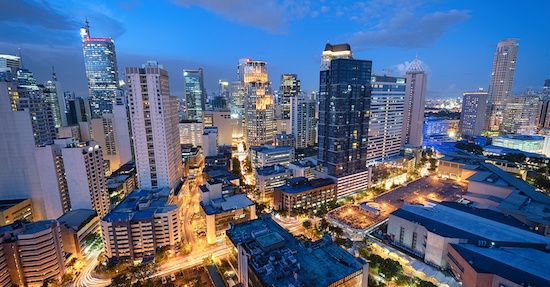
From the 70th place, the Philippines stepped up to the 58th spot in the 2017 Index of Economic Freedom as a result of economic growth and fiscal increases according to US think tank, The Heritage Foundation. Makati The group’s website cited the country’s improvement factors on economic freedom was the country’s remarkable economic expansion influenced “by the economy’s strong export performance and inflows of remittances that have bolstered private consumption.” Philippine economy stretched out by 6.8% in 2016, landing within the government’s 6% to 7% estimated growth range, making the country stay on track as one of the fastest-growing country in Southeast Asia. The Philippines has been on a steady uphill climb in the Washington think tank’s rankings. The growth continued to be essentially influenced by an outpouring in investment and consumer spending, letting the economy to undergo post rapid expansion at a period of weak global demand. The Philippine government’s pursuit to generate wide-reaching job growth was apparent on the runs of legislative reforms to augment the entrepreneurial environment and to advance the status of the private sectors, the report added. The Heritage Foundation economic freedom index measures how alteration in policy affect the general quality living in a country. The post Philippines soars in 2017 global economic freedom ranking appeared first on Good News Pilipinas. Related posts: PHL jumps 8 places in Economic Freedom Index PHL jumps 8 notches in World Economic Freedom index PH economy soars in Q2, now Asia’s fastest growing PHL posts strongest economic Read More …
THE opportunity loss for the Philippines as a result of the controversy generated by the new government amounts to foregone investment from two European companies that would have created 5,000 jobs, a European business chamber official said on Wednesday.
THE PHILIPPINES rose to the 58th spot in this year’s Index of Economic Freedom, riding on robust economic growth and fiscal gains, although concerns remain on whether these can be sustained under the new government.
MEXICO proposed a free trade deal with the Philippines and the possibility of freeing up visa arrangements during a meeting between top officials of the two countries.
The Magna Carta for Disabled Persons enacted in 1992 affirms that the State shall give full support to the improvement and well-being of disabled persons and their integration into mainstream society. The results of the 2010 Census of Population and Housing (2010 CPH) reported that of the 92.1 million household population in the country, 1.4 million persons (or 1.57%) had some form of disability. Albeit laborious, the Philippines has improved in enforcing and promoting benefits and privileges for Persons With Disabilities (PWDs).
CHINA reaffirmed its commitment to the Philippines as a “reliable partner” in tourism and trade, with that country’s ambassador also supporting emergency powers for the Philippine government to ensure key infrastructure projects are not delayed beyond the current presidential term.
NET INFLOWS of foreign direct investment (FDI) to the Philippines in November hit a six-month high, reversing the outflow seen in October, with the year-to-date tally inching closer to $7 billion — well above the central bank’s full-year forecast for 2016.
DAVAO CITY — Detailed projects are now being drawn up under the BIMP-EAGA Vision 2025 (BEV 2025) as the four member countries of the sub-regional grouping aim for more tangible results by the end of the new road map.
EXPORTS in developing Asia, including the Philippines, may have recovered slightly in 2016 after the global slowdown in 2010-2015, the Asian Development Bank (ADB) said in a brief yesterday.
MITSUBISHI UFJ Financial Group, Inc. (MUFG) expects more Japanese companies to enter the Philippines with economic growth to range between 6-7% this year, led by heightened consumer spending, robust business process outsourcing (BPOs) sector and overseas Filipino worker (OFW) remittances.