With Taiwan going visa-free for regular passport holders come November 1st, many Filipinos are undoubtedly already looking to visit our neighbors to the north to try out xiao long bao, stinky tofu and all the wonderful cusine that the island has to offer. But did you know that there’s a bunch of other countries that Pinoys can also visit without needing a visa? There’s around 61 countries, in fact that you can visit without having to apply for a visa, though there are a few caveats for some of these. Korea, for example, only allow you to visit Jeju island without a visa, while Azerbijan and Georgia allows for a visa-free visit only if you hold a valid visa for Australia, Canada, Japan, New Zealand, Schengen countries, the UK and the US. And contraty to popular belief, there is a country in Europe that you can visit without needing a visa. Without further ado, check out the full list below: ASEAN: Brunei Darussalam (14 days) Cambodia (21 days) Indonesia (30 days) Laos (30 days) Malaysia (14 days) Myanmar (14 days) Singapore (30 days) Thailand (30 days) Vietnam (30 days) ASIA: Azerbaijan (30 days, must have valid visa for Australia, Canada, Japan, New Zealand, Schengen countries, the UK and the US) Taiwan (30 days, starting from November 1) Georgia (90 days, must have valid visa for Australia, Canada, Japan, New Zealand, Schengen countries, the UK and the US) Hong Kong India (30 days, visa issued upon arrival) Iran (15 days visa issued upon Read More …
Need an MS Access programmer, Excel, Visual Basic or C# developer in Philadelphia, PA? Time and again you will need a professional developer to help you out and that’s where we at http://interloperinc.com come in handy. Contact us with your MS Access problems and let us help you out. We work on MS Access, Excel, Visual Basic, C# along with many other technologies.
We’ve all been excited about the prospect of visiting our neighbor to the north, Taiwan, without visas ever since they announced the plan to lift visa requirements back in June. Finally on Monday October 16th, the Taipei Economic and Cultural Office announced that Philippine passport holders visitng Taiwan “for the purposes of tourism, business, visiting relatives, attending functions or events can now enjoy visa-free entry for up to 14 days, beginning November 1, 2017. Taiwan’s lifting of visa requirements and the overall friendlier travel climate for the Philippines and other Southeast Asian nations is part of their “New Southbound Policy”, which enhances co-operation and exchanges with 18 countries in Southeast Asia, South Asia and Australasia. To qualify for visa-free entry, visitors must meet the following requirements: A regular passport with remaining validity of at least six months from the date of entry Return ticket or a ticket to the traveler’s next destination No criminal record in Taiwan Proof of accomodation/booking, contact information of host/sponsor in Taiwan or official invite to conference, tour, events, etc. in Taiwan That’s it! If you’re looking for a unique (and relatively affordable) travel destination in the near future, why not make it Taiwan? The post You’ll No Longer Need A Visa To Visit Taiwan Come November 1st appeared first on Good News Pilipinas.
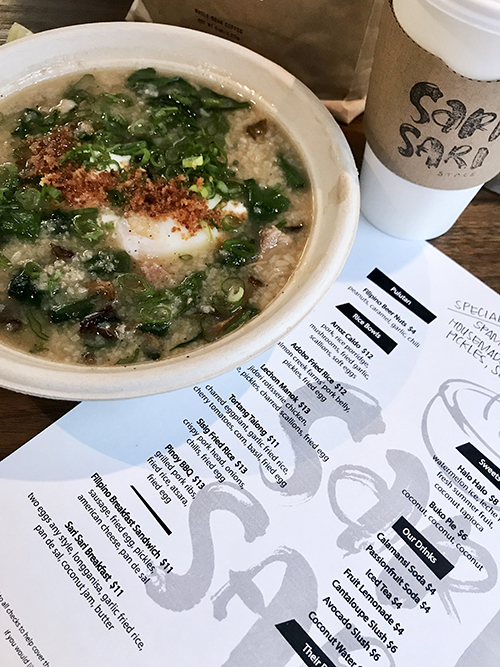
Filipino food offered by the new Sari Sari Store in Downtown LA’s Grand Central Market is getting raves reviews for appealing to foreign taste buds while staying true to Filipino roots. The all-Filipino dish menu offered by Sari Sari Store, a Filipino concept stall set up by Philippines-born and raised Chef Margarita with business partner and fellow chef Walter Manzke, was praised by Los Angeles Times, LA Weekly, and the LA Eater. The menu is based around savory rice bowls or ‘silog’ that pull from Margaritas’s Pinoy heritage, as well as a few sweet items like halo halo. LA Times food critic Jonathan Gold admitted to him and his colleagues crushing on the new Grand Central stall quipping, “I have stopped by Sari Sari Store five times in the last three days, and I’m not sure if I should be admitting this to you or to a therapist.” Gold also attests to sampling and recommending any and all items on the Sari Sari Store menu saying, “It may be an odd thing to say about a restaurant, but at Sari Sari Store it really doesn’t matter what you order.” Gold’s review details how he tried the arroz caldo, the sisig fried rice, the adobo fried rice and is eager to keep coming back for the same. The article hailed the Filipino Rice Bowl Stall’s lechon manok, grilled pork ribs, silog made with homemade “Spam’’ and tortang talong as keeping the food reviewer coming back day after day. Filipino desserts buko Read More …
Dahlia Agbanlog knew early on that Pinoys living and working in Qatar would want to eat traditional meals that reminded them of home. Transitioning to working at a foreign land isn’t easy, and chomping down on Adobo served by fellow Pinoys certainly helps your mind feel at ease in a foreign country, she reasons. Dahlia Agbanlog has serving OFWs a taste of home ever since 2001, when she first visited her brother in the Arab nation. It was her first and last visit—she never went back to the Philippines, deciding instead to make a life for herself in Qatar, and bring a taste of home to Pinoys based there. Agbanlog told Rappler that her first restaurant opened in 2001, and consisted of just her, her brother as the chef, her father as cashier, and another relative as a dishwasher. The very first day that her restaurant opened, lines from the cashier spilled over to the streets, which was a hint of things to come. That first restaurant eventually closed down due to a downturn in business partnerships, but Agbanlog did not give up. After that, she opened the first Nayong Filipino restaurant in Mesaieed in 2004. She later closed that branch two years later to open a new one in Al Khor, sensing that there would be a flood of Filipinos that were flocking to the country to work, amid the start of the migration that would make Qatar the third most populated country by Filipinos. She grew Nayong Filipino from a Read More …
Six young Filipino actors have been cast in “The Lion King” musical’s first international tour in celebration of its 20th anniversary of the Disney production as a stage musical. The Lion King international tour which will have its first stop in Manila in March 2018 will have young artists from the Philippines performing together with international stage artists. Alternating in the role of Young Simba are: Julien Joshua Dolor Pablo Palacpac and Juan Gabriel Tiongson Young Nala will be performed by: Sheena Bentoy Uma Martin Felicity Napuli The six young Filipino artists join the cast after months of auditions which began in March this year in South Africa. “After six months of intensive auditions, we have been able to bring together a truly international group of performers that will showcase the talent from almost every corner of the world. From seasoned professionals to actors making their professional debut, this company of ‘The Lion King’ will be sure to delight and amaze audiences as we tour this phenomenal production around the globe,” revealed Michael Cassel, producer of the international tour. “Julie Taymor and her extraordinary creative team have brought together a truly diverse company, representing twelve countries in this production of enormous scale, beauty and heart. I cannot wait for new audiences in the Philippines, Singapore, South Korea, and Taiwan to share an indelible theatrical experience for the first time, with this talented cast,” said Thomas Schumacher, president and producer of Disney Theatrical Productions. The young Filipino actors will join the Read More …
The “Ber” months officially started last September and you can feel the Christmas vibe especially when you’re in the mall. Business-minded Pinoys have already begun to take advantage of holiday rush by joining bazaars, which are frequent during this time of the year. If you’re a bazaar veteran or if you want to put up a business in time for Christmas, you might want to consider skipping the hassle of city traffic and try your hand in e-commerce and sell your products online. To help you get started here are 5 key steps you need to take to create a profitable online business. 1. Set up your Online Store You don’t need to spend hundreds of thousands of pesos to set-up a website with e-commerce capabilities. There are easy-to-use and set-up services like Shopify and TackThis. You can even try your hand out in selling on Lazada which already has millions of visits monthly. We’ve written extensive guides on how to set-up accounts in these channels which you can read below: How to Create Your Own Online Store on TackThis How to be an Online Seller on Lazada How to Open Your Online Store Using Shopify These platforms offer end-to-end solutions for e-commerce. They have the website which you can customize, a payment platform, delivery partnerships, and some of them even offer product photography in their studio. Just read through and pick which one is the best for you. 2. Set up your Facebook Page 96% of all Internet users Read More …
The Philippine national powerlifting women’s team picked up 4 overall championship crowns and 32 gold medals at the Asian Bench Press Championships held in Quezon City. The Filipina powerlifters won the titles in 4 categories: Women’s Masters Women’s Open Women’s Juniors Women’s Sub-juniors The women’s and men’s national teams competed for the championship crowns against 300 lifters from Japan, United Arab Emirates, Iran, Iraq, Uzbekistan, Kazakhstan, Kyrgyzstan, Hong Kong, Taiwan, India, Indonesia, Mongolia, Lebanon, and Pakistan. The 32 gold medals Philippines haul at the Asian Bench Press Championships: Anita Koykka – 2 gold medals (Women’s Masters, Women’s Open, -57 kg.) Victorina Calma – gold (Women’s Masters) Kathy Moran – gold (Women’s Masters) Nina Oca – gold (Women’s Masters) Jane Quiambao – gold (Women’s Masters) Jinky Guion – gold (Women’s Open) Leslie Evangelista – gold (Women’s Open) May Estrera – gold (Women’s Open) Lee Anne Zipagan – gold (Women’s Open) Samantha Tayag – gold (Women’s Open) Joan Masangkay – gold medal (Women’s Juniors, 43 kg.) Kathleen Chiang – gold medal (Women’s Juniors -63 kg.) Maxine Fugen – gold (Women’s Juniors) Nicole Go – gold (Women’s Juniors) Catherine Marthos – gold (Women’s Juniors) Jessa Mae Tabuan – gold medal (Women’s Sub-Juniors -43 kg.) Rowella Abrea – gold medal (Women’s Sub-Juniors -47 kg.) Francisco Arca – gold medal (Men’s Sub-Juniors, -66 kg.) Veronica Ompod – gold (Women’s Sub-Juniors) Rachel Bais – gold (Women’s Sub-Juniors) Daisy Grace Lipasana – gold (Women’s Sub-Juniors) Marielle Liwanag – gold (Women’s Sub-Juniors) Rolando Maye – gold medal (Men’s Read More …
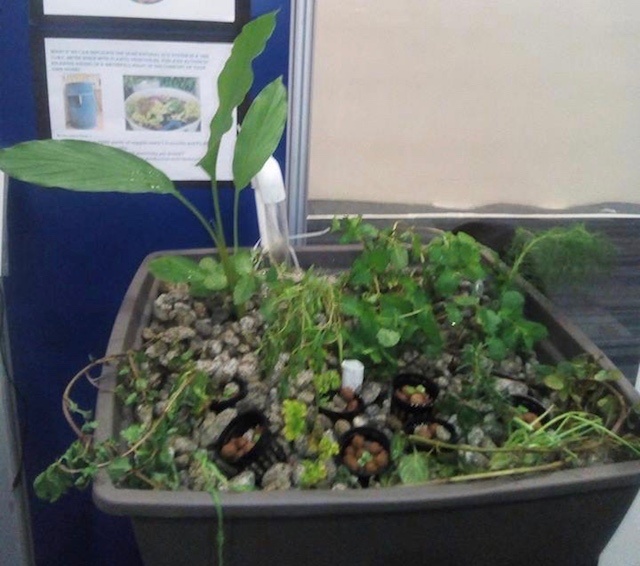
Despite recent advances in food technology, hunger is still a big problem in our country. Over 7 million children experience hunger and malnutrition in the Philippines because of inadequate access to nutritious food, lack of nutrition education and poor health and sanitation services. Robi del Rosario knows this problem too well, and has developed a novel way to address it: “Aquaponics” – the science of growing plants without soil in a way that almost anyone can replicate. His Barangay Aquaponics project aims to help marginalized communities to solve one of their biggest concerns: the lack of access to healthy, nutritious food. “The United Nations stated [that] to end world hunger, we need to have localized food systems. And we feel that aquaponics will be part of the future in how we produce food, because it’s not only sustainable, it will also help address our nutrition problem, especially the children,” Del Rosario told Rappler. The simple system looks complicated but is actually pretty easy to replicate: a fish tank is positioned right below a grow bed, and waste generated by fish like tilapia and shrimp are converted to food for the plants by nitrifying bacteria. The plants, in turn, filters and recirculates the clean water back to the fish, where the cycle begins again. According to Del Rosario, the system is very low maintenance – after it’s been setup, there’s very little to look after and maintain. The system is also very efficient in terms of the space required and needed Read More …
We all dream of becoming successful. While some prefer having a simple life, simply relying on our day job may not be sufficient to secure the future of the family. Sometimes the best way to provide for the needs of the family is to start our own business. Building a business is hard work. You need to figure out the best location for the business, secure permits, hire people; the list goes on. All these tasks require time and effort. To become an entrepreneur means to sacrifice a lot. Leisure Time: Starting a business requires a lot of time. You need to focus not only on one aspect of the business, but the entirety of it. Time with family and friends may be sacrificed. Instead of relaxing and hanging around with friends, entrepreneurs would find themselves working more than 8 hours a day, and sometimes even on weekends. So if you used to be a happy-go-lucky guy, entrepreneurship could be a whole new world which could shock you in the first few months. Money: Starting a business means having to spend your hard-earned money. If you used to party every weekend or go out on trips with your family and friends, that may have to change. Starting a business means having to cut down on your expenses. Every centavo should count as you focus on sustaining the business. Properties and Assets: You may have to let go of some of your possessions as you try to sustain your business. But Read More …